
Storage Tanks: A Practical Guide to Types and Selection
Storage tanks divide by construction and lining: bolted Glass-Fused-to-Steel (GFS) and Fusion-Bonded Epoxy (FBE) tanks offer factory-applied, corrosion-resistant linings and fast erection; stainless (304/316L) serves aggressive or hygienic duty; hot-dip galvanized suits economical raw water; welded and concrete tanks serve very large or fixed sites. Select by the stored media’s chemistry, the climate and the required life – not by which type is familiar.
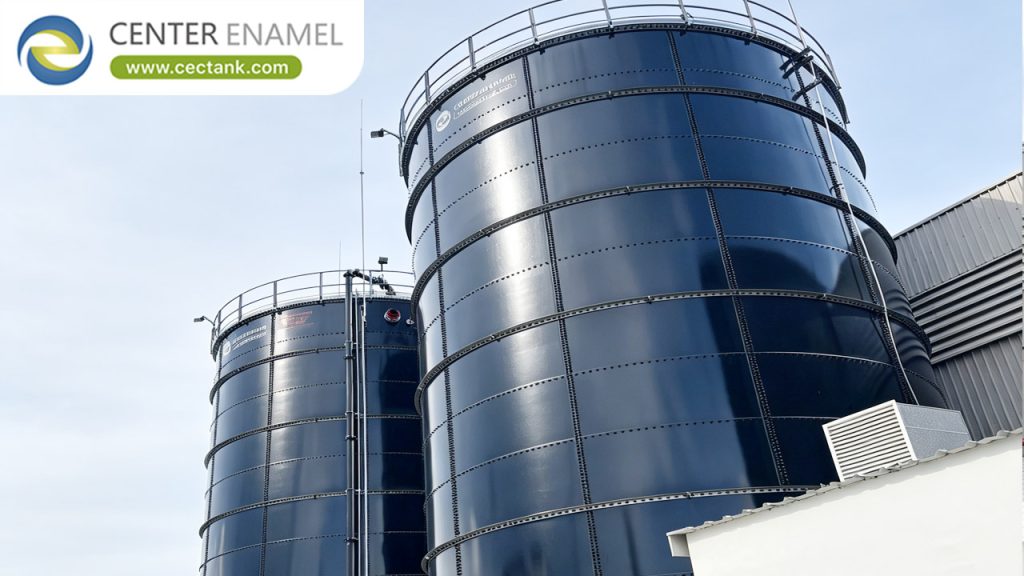
Bolted GFS and FBE tanks dominate the bolted segment because the lining is fused or cross-linked in the factory, giving corrosion resistance and quick site erection. Stainless (304/316L) is specified for aggressive chemicals or food/pharma hygiene. Hot-dip galvanized is the economical raw-water option. Welded steel and concrete remain for very large volumes or where local practice dictates.
- GFS: inert glass lining, bolted, fast.
- FBE: thick epoxy lining, bolted.
- Stainless 304/316L: aggressive / hygienic.
- Galvanized: economical raw water.
- Welded / concrete: very large or fixed.
Selecting by Stored Media
The chemistry of the contents drives the lining. Potable and many wastewaters favor GFS or FBE; aggressive or chloride-heavy streams call for stainless or a specialized lining; raw water can use galvanized. The pH, temperature and abrasives decide the rest.
- Potable / general: GFS or FBE.
- Aggressive / chloride: stainless.
- Raw water: galvanized acceptable.
Selection Factors at a Glance
Beyond media, weigh erection speed, transport, maintainability and lifecycle cost. Bolted tanks ship flat and replace panels individually; welded tanks need field coating; concrete is slow but robust at huge scale.
| Type | Best for | Watch |
| GFS bolted | Potable, wastewater, process | None major; verify holiday test. |
| FBE bolted | Aggressive organic lining | Thickness per chemistry. |
| Stainless | Hygienic / aggressive | Grade by chloride. |
| Galvanized | Economical raw water | Not for potable unless rated. |
| Welded | Very large / local practice | Field coating quality. |
| Concrete | Huge fixed sites | Slow, joint sealing. |
Project Reference
The full range is delivered worldwide: potable GFS at Namibia (six 11,230 m3 tanks, 2022) and Italy Sardinia (30,549 m3, 2025); stainless at Chile (SS316L brine, 2022) and Spain (SS316 wastewater, 2024); and welded at Barbados (drinking water, 2024) – each matched to its media and site.
- Namibia 2022 / Italy 2025: large GFS potable.
- Chile 2022 / Spain 2024: stainless duty.
- Barbados 2024: welded painted tank.
Company Expertise
Center Enamel’s bolted-tank portfolio spans GFS, FBE, stainless and galvanized, designed to ISO 28765 / AWWA D103-09, so the same supplier can match the tank to the media rather than pushing one type.
Frequently Asked Questions
What are the main storage tank types?
Bolted GFS and FBE, stainless (304/316L), hot-dip galvanized, welded steel, and concrete – each suited to different media and sites.
Bolted or welded?
Bolted ships flat, erects fast and allows panel replacement; welded suits very large volumes but needs field coating at seams.
Which tank for potable water?
GFS or FBE with a potable-rated lining (NSF/ANSI 61 or WRAS as applicable).
When is stainless worth it?
For aggressive chemicals, high chloride, or food/pharma hygiene where grade 316L earns its cost.
Is galvanized safe for drinking water?
Only if the coating is potable-rated; otherwise use it for raw water.
How do I select?
By the stored media’s chemistry, the climate, erection constraints and lifecycle cost – not familiarity.
Storage tanks are chosen by what they hold and where they stand. Match the lining to the media – GFS/FBE for general and process, stainless for aggressive or hygienic, galvanized for raw water, welded or concrete for huge fixed sites – and the tank will fit the job instead of fighting it.
Suggested CTA: Describe the media, site and life you need and we will select the tank type and lining that fits, not the one we happen to stock.